The Myth of the Paperless Office
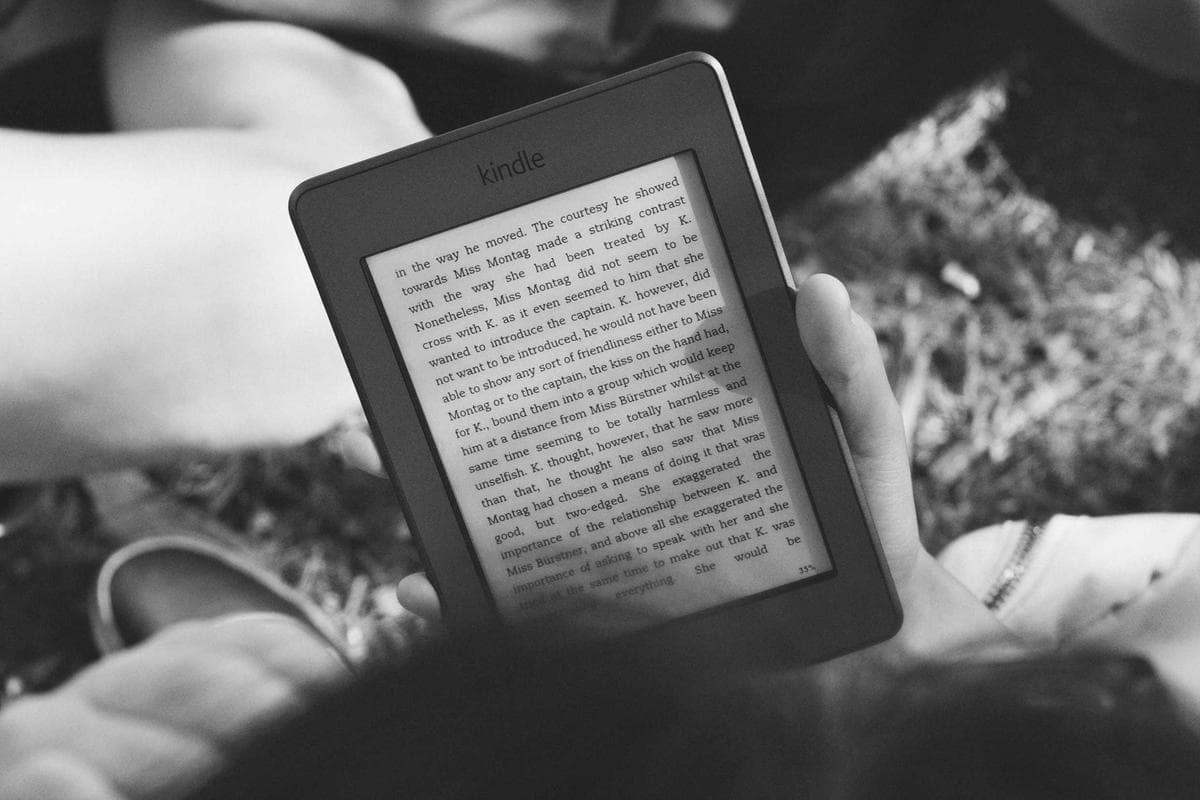
In 1975, a widely cited Business Week article predicted the "paperless office" would arrive within roughly two decades. Fifty years on, global paper consumption is higher than it was when the prediction was made. The office did not go paperless. It went digital and paper-full at the same time, and somehow ended up with more documents to manage than before computers arrived to manage them.
Why the Prediction Failed
The error was assuming that digital documents would replace paper ones rather than multiply alongside them. Digitization did not eliminate the impulse to print; it simply made producing a document so cheap that far more of them got created, and a meaningful share of those still end up on paper at some point in their life cycle — signed, annotated, filed, or simply preferred, because reading on paper remains, for many tasks, genuinely easier on the eyes and the memory.
Digitization did not eliminate the impulse to print. It simply made producing a document so cheap that far more of them got created.
What We Actually Got
What we got instead of paperlessness was documentlessness of a different kind — a state where information exists but is no longer anchored anywhere stable. A memo that once lived in a single physical folder now exists as six slightly different versions across email, a shared drive, a chat thread, and someone's downloads folder, all subtly out of sync with one another.
- The average knowledge worker touches dozens of digital documents a day, many of them duplicates or near-duplicates
- Paper consumption in offices has not declined in step with digital adoption, contrary to the original prediction
- Digital documents introduced a new problem paper never had: version confusion
The Hidden Costs of Digital Sprawl
The costs of this sprawl are rarely tallied honestly because they show up as small, distributed inefficiencies rather than a single obvious line item. A few minutes searching for the correct version of a file, repeated across an entire organization several times a day, adds up to a genuinely large amount of lost time that never appears on a balance sheet the way a stack of paper in a filing cabinet visibly would have. Paper sprawl was at least visible — a full cabinet was an obvious signal that something needed sorting. Digital sprawl is invisible by default, which makes it considerably easier to ignore and considerably harder to ever fully clean up.
There is also a search cost that paper never really had in the same form: a physical document, once filed correctly, stayed exactly where it was put. A digital document can be moved, renamed, duplicated, and forked into a dozen slightly different versions by a dozen different people, each edit invisible to everyone else until someone stumbles across the wrong copy and has to reconstruct which version was actually the authoritative one.
Why Paper Persists Where It Persists
It is worth taking seriously the specific tasks where paper has stubbornly refused to be replaced, because the pattern is instructive. Long, careful reading — a contract before signing, a manuscript before publication, a dense technical document before a decision gets made on it — still moves to paper more often than the paperless prediction assumed, and not out of habit alone. Studies on reading comprehension have repeatedly found that people retain and process long-form material somewhat differently on paper than on a screen, with paper readers more often building an accurate spatial memory of where in the document a given point appeared, a cue that seems to genuinely aid recall later.
None of this means digital reading is inferior in general; for short material, for searchable reference, for anything that benefits from being instantly shareable, digital wins decisively and paper was never seriously competitive. But the persistence of paper for a specific category of task — long, careful, high-stakes reading — suggests the original paperless prediction was wrong not just about adoption curves but about the underlying assumption that all reading is functionally the same regardless of medium.
The Meetings That Multiplied Alongside the Documents
A related, less-discussed casualty of the digital shift is how it changed the meetings built around a document rather than the document itself. A physical memo circulated once, was read, and generated a single round of feedback funneled back to its author. A digital document, easy to edit and comment on by dozens of people simultaneously, has instead generated an entire secondary economy of status meetings, comment threads, and version-review calls, all dedicated to reconciling the very proliferation the original paperless promise was supposed to prevent. The paper is mostly gone from these processes. The coordination overhead it used to force through simple physical scarcity has, if anything, grown to fill the space that scarcity used to occupy.
A More Honest Goal
The goal was never really "no paper." It was clarity — one authoritative version of a document, easy to find, easy to trust. That goal remains worth pursuing. It just has very little to do with how much paper sits in the recycling bin at the end of the week.