The Tyranny of Optionality
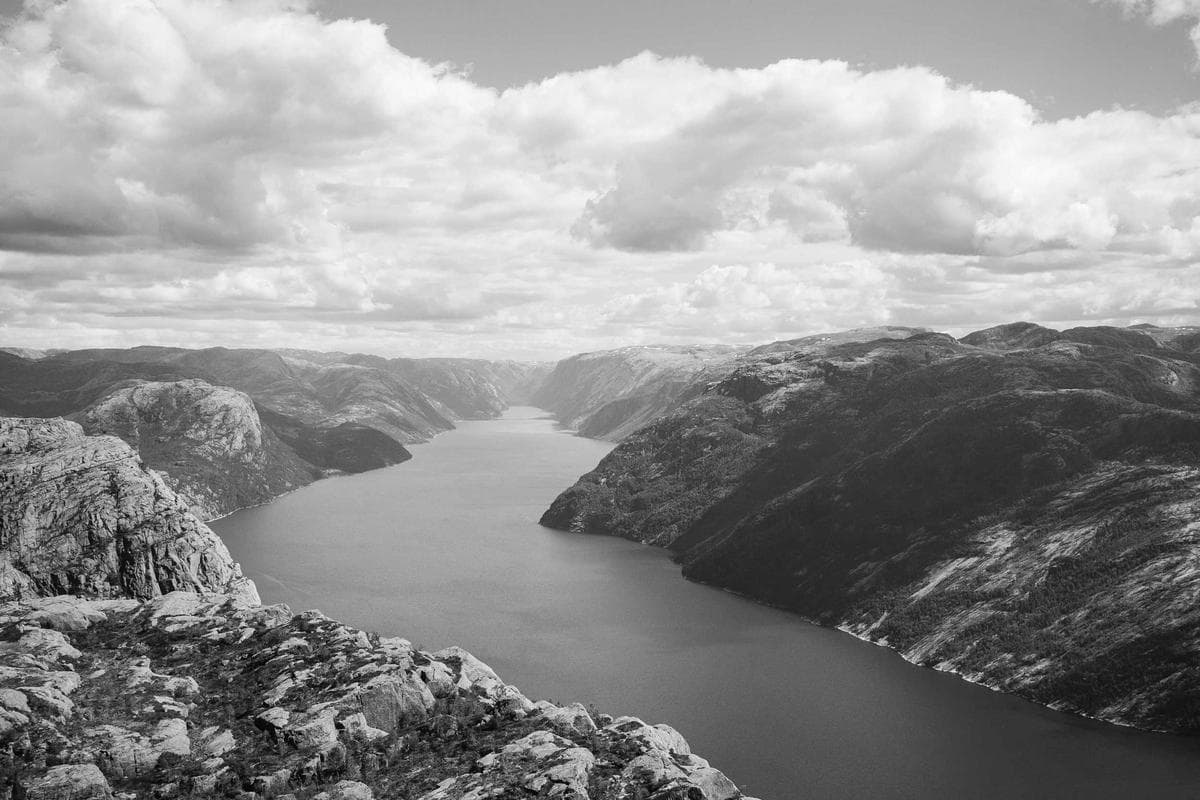
There is a particular kind of paralysis that comes not from having too few options but from having too many, none of them closed off. It shows up in small decisions and large ones alike: the restaurant menu with forty items, the career kept deliberately undefined to preserve flexibility, the relationship left ambiguous so as not to foreclose other possibilities.
The Economics of Not Choosing
Optionality has real value, and the instinct to preserve it is not irrational. An option, in the formal sense economists use the word, is worth something precisely because it can be exercised or not, depending on how things unfold. The trouble is that this logic, useful for financial instruments, generalizes poorly to a life. A life is not a portfolio to be optimized indefinitely; at some point, the value of an option depends entirely on someone actually exercising it.
- Every option preserved is also, quietly, a commitment not yet made
- The cost of keeping options open is rarely visible in the moment, because it is a cost paid in foregone depth rather than a line item
- Depth — in relationships, skills, and work — is only available to the options that eventually get closed off in favor of the others
The Paradox of Choice in Consumer Life
This pattern shows up in miniature every time a shopper stands in front of a shelf with too many nearly identical products on it. Research on consumer decision-making has repeatedly found that a smaller set of options often produces both faster decisions and higher satisfaction with the choice eventually made, compared to a larger set that seems, on its face, more generous. More options do not simply cost more time to evaluate; they raise the psychological stakes of the choice itself, because a decision made from forty alternatives implicitly promises that the right one is in there somewhere, findable if only you look hard enough.
The same mechanism operates at a much larger scale in a life full of preserved optionality. A career kept deliberately undefined, a relationship left ambiguous, a set of skills spread thin across many possible directions — each of these resembles the crowded shelf, promising that the right choice is still available if only enough alternatives are kept open. The promise is rarely delivered on, for the same reason the crowded shelf rarely delivers a more satisfying purchase: evaluating more options does not reliably produce a better outcome, only a longer search.
What Gets Lost in the Keeping-Open
The paradox is that a life spent maximizing optionality often produces less freedom, not more. Depth in any domain, whether a craft, a relationship, or a body of work, is only available to the paths that were eventually chosen at the expense of the others. Optionality maximized indefinitely does not produce a richer life. It produces a wider, shallower one.
Depth is only available to the paths eventually chosen at the expense of the others.
The Special Case of Digital Optionality
Modern digital tools have made optionality dramatically cheaper to preserve than it used to be, which has quietly shifted the default in its favor. A career possibility can be kept open with a saved job listing rather than a real conversation. A social connection can be kept open with an unanswered message left on read rather than either a real reply or a clean decision to let it go. A creative project can be kept open indefinitely as a folder of notes rather than either finished or abandoned. None of these acts of preservation cost anything visible in the moment, which is precisely why they accumulate so easily into a life quietly cluttered with options that were never actually closed, only left to fade.
The cheapness of digital preservation is not a neutral fact. It changes behavior simply by removing the friction that used to force a decision. A saved job listing that costs nothing to keep never has to be explicitly declined; it simply sits, unresolved, alongside dozens of others, until the accumulated weight of open options becomes its own kind of burden — not because any single one is a problem, but because the total number of things left undecided quietly grows past what any person can meaningfully track or act on.
Closing Doors Deliberately
The corrective is not dramatic. It is the regular, unglamorous practice of explicitly closing options that are not going to be exercised, rather than letting them fade on their own: declining the listing rather than leaving it saved, replying honestly rather than leaving a message on read, finishing or explicitly abandoning the project rather than letting the folder accumulate. Each individual closure feels small. The cumulative effect, over months, is a life with noticeably less quiet background weight — and, paradoxically, more room to actually go deep on the options that remain.
A Useful Distinction: Reversible and Irreversible Choices
Not every closed door carries the same weight, and treating all commitments as equally risky is part of what keeps people stuck in unnecessary optionality. A useful mental habit, borrowed loosely from decision theory, is to sort choices into those that are cheaply reversible and those that genuinely are not. A reversible choice — trying a new hobby, taking a role at a company, moving to a new city — can be made quickly and revised later at manageable cost if it turns out wrong, which means the anxious deliberation so often applied to these choices is frequently disproportionate to what is actually at stake.
Irreversible or expensive-to-reverse choices genuinely do warrant the more careful deliberation optionality-preservation is trying, clumsily, to provide. The error is applying that same level of caution indiscriminately to every choice, reversible and irreversible alike, which produces exactly the paralysis described earlier without actually protecting against the narrower category of decisions where the caution would be warranted. Sorting a looming decision into one bucket or the other, honestly, is often enough on its own to dissolve a surprising amount of the anxiety keeping it unresolved.
None of this is an argument for impulsive commitment. It is an argument for noticing when "staying flexible" has quietly become a permanent state rather than a temporary one — and for recognizing that at some point, the freedom worth having is the freedom that comes only after a door has been closed.