The Resurgence of Brutalism in Modern Urban Spaces
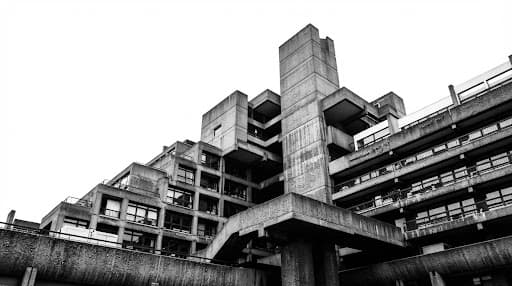
There is a building near the center of most mid-century cities that people love to hate: a fortress of raw, unpainted concrete, its surfaces bearing the exact grain of the wooden forms that shaped it. For forty years it has been called ugly, cold, a monument to bureaucratic indifference. Lately, something has shifted. That same building is showing up on gallery walls, on the covers of design magazines, and in the feeds of people young enough to have never lived through the decades when brutalism was the default language of public architecture.
Concrete as Conviction
Brutalism was never trying to be liked. Its name comes from the French béton brut, raw concrete, and its central premise was structural honesty: no cladding, no ornament, no attempt to disguise how a building was actually made. In the optimism of the postwar decades, this felt less like austerity and more like integrity. Architects reasoned that a material shown exactly as it was, poured and cured and left bare, was more truthful than a façade dressed up to look like something else.
That conviction produced civic buildings meant to serve everyone equally — libraries, housing blocks, university halls — built from a material that was cheap, durable, and indifferent to class. The severity was the point. A concrete surface does not perform wealth or taste. It simply endures.
A material shown exactly as it was, poured and left bare, felt more honest than a facade.
The Politics Poured Into the Concrete
It is easy to forget, looking at a weathered slab today, that these buildings were originally an argument about equality. The postwar welfare states of Britain and continental Europe built brutalist housing estates and civic centers as a literal, physical claim: that ordinary citizens deserved architecture as ambitious as anything built for the wealthy. A concrete library in a working-class district was not a compromise. It was, in its own severe way, a statement of civic seriousness — the same material, the same monumental scale, that a bank or a cathedral might once have claimed exclusively for itself.
This is part of why the style spread so quickly through government commissions, universities, and public housing authorities across three continents. It was not merely aesthetically fashionable among architects; it was ideologically convenient for planners who wanted to signal that the postwar state could build at civic scale, quickly, durably, and without the expense of ornament that only the previously wealthy classes had been able to afford.
Why We Turned Away
The reputation collapsed for reasons that had less to do with the buildings themselves than with what happened around them. Concrete stains and streaks in ways that brick and stone do not, and decades of deferred maintenance left many brutalist structures looking derelict long before they were. Municipal budgets that had funded ambitious construction in the 1960s rarely stretched to cover the ongoing upkeep those same buildings required a decade later, and a material celebrated for looking honest when new can look simply neglected when weathered without care.
Popular film and television leaned on their severity as visual shorthand for dystopia and decay, and the association stuck with a thoroughness that outlasted the specific films that first cemented it. By the 1980s, "brutalist" had become an insult, entangled with a broader political backlash against the postwar welfare state itself — a rejection of both the architecture and the optimistic public ambition it had been built to represent. A wave of demolitions followed, with entire estates and civic centers razed rather than restored, often justified with the same language of decline the buildings had themselves become a symbol of.
The Reappraisal
What's changed is not the architecture but the distance we now have from it. A generation removed from the political anxieties that made these buildings unfashionable can see them freshly, as objects rather than symbols. Photography has done much of this work: the same dramatic geometry that once read as menacing photographs beautifully in black and white, and a whole online culture has grown up around documenting these structures with a reverence closer to landscape photography than architectural criticism.
- Heritage bodies in multiple countries have begun formally listing brutalist landmarks that were, a decade ago, slated for demolition
- A dedicated online community documents and catalogs brutalist buildings worldwide, often saving lesser-known structures from obscurity
- Developers have started adaptively reusing brutalist office blocks and car parks rather than demolishing them, preserving the concrete shell while reworking the interior
- A new generation of architects cites brutalism’s material honesty as a direct influence, in explicit reaction against decades of decorative, historicist design
The Preservation Fight Is Not Finished
None of this reappraisal has settled the matter. For every brutalist landmark saved by a heritage listing, another has been lost in the years since preservation campaigns began gaining real traction — torn down over the objections of architects and historians who considered it significant, replaced by the same glass-and-steel commercial towers the style had once positioned itself against. The fights tend to follow a familiar shape: a local council or private developer arguing the building is a maintenance liability and a poor use of valuable land, against a coalition of architects, historians, and increasingly, younger residents who see the structure as a rare surviving piece of a specific, ambitious era of public building.
These fights matter beyond the fate of any single structure, because they are really arguments about who gets to decide what counts as heritage worth keeping. Ornate Victorian facades were rarely at risk of demolition by the time preservation movements organized around them; brutalism is being fought over while a meaningful share of the public still actively dislikes it, which makes the current moment unusually consequential. The buildings that survive the next decade of these fights will likely be the ones that define how brutalism is remembered at all.
What Brutalism Still Teaches Us
The lesson embedded in these buildings was never really about concrete. It was about the willingness to let a material, and by extension an idea, stand unadorned and take the consequences. That is a harder position to hold than it sounds, and it is perhaps why brutalism keeps returning to relevance: every generation eventually tires of surfaces built to flatter, and rediscovers the appeal of something that simply is what it appears to be.